S1 · E05 / 57 min
Positioning Yourself for Nonprofit Communications Roles
A list of tasks says little about the problem you can solve. Ibukun and Grace unpack nonprofit job descriptions, evidence of impact and a more intentional job search.
1 Oct 2026Originally streamed on LinkedIn ·
Listen here using Spotify’s player, or open the episode on Spotify.
Player not starting in this browser? Open this episode on Spotify (opens in a new tab)
In this conversation
What is a communications employer really hiring for? Starting with Ibukun’s review of job adverts and Grace’s experience of hiring, this conversation looks beyond the task list to the problems a role is meant to solve.
They discuss writing that connects with people, taking ownership of a role, and showing how communications contributes to organisational goals. They also examine combined roles and the questions worth asking before accepting an unrealistic brief.
AI skills are part of the discussion, including the need to understand an organisation’s approach and keep your own judgement visible. The episode closes with practical reflections on a job-search strategy, reaching out to your network and making your contribution clear in applications and interviews.
Ideas to take back to work
- Read a job description for the organisational problem behind the list of activities.
- Use outcomes and examples to explain your contribution, rather than relying on a list of outputs.
- Clarify expectations and resources when a role combines several functions.
- Be specific about the work you want, the evidence you can show and the people you can approach for a conversation.
Transcript
Machine-generated transcript. This text was produced from the final audio and checked for broad coverage and obvious errors, but it may contain mistakes. Speaker identities have not been verified.
Hello, I'm Ibukun, and I am Grace. We are the hosts of Unmuted Comms, a podcast for comms leaders by comms leaders. This is a podcast about the leadership, influence, and decisions behind great non-profit communication. We have candid conversations about what it takes to lead communications in the non-profits sector. These include things like building strong teams, advising executives, and initiatives, navigating organizational dynamics, earning influence, and making comms a more strategic force for mission and impact.
Okay, you're live. Hi everyone, welcome back to Unmuted Conversations in Comms. This is where we, as usual, have practical conversations about life as professionals in communications. I'm Ibukun and I have my friend Grace here with me. Ibukun, why are you greeting us like it's just another day? Good morning, good afternoon, good evening to everyone. I hope you are all keeping well. It's been a while since we've seen people so it's important to bring in the energy but it's really good to connect with you and I hope that you're all good since we last spoke and this is a special hello to those who are not following the World Cup. We are still living, we are still thriving,
nothing missing, nothing broken. That's a special hello for them. Okay, you know who works in the World Cup? No, no. We shall not be strangled in this World Cup thing, so we are thriving. But how have you been, Ibukun? I'm okay. My country didn't qualify, so it's okay. I can't even speak, so I am very humble in this particular sport. Okay. All right, so we do have a lot to talk about today. Today, we are looking at positioning yourself for nonprofit communications roles. It's a really tough time to be out of a job or be job hunting. It is actually something that Grace and I have been having lots of conversations around and also talking to people who reach
out asking about job vacancies and job opportunities. And then just globally, the nonprofit sector is going through a lot since almost last year. So this Unmuted we're going to be exploring some of that and hopefully there will be some insights or some wisdom that will be useful to someone out there. So we have a lot to talk about. Grace is a comms leader, so we'll be discussing what leaders are hiring for. She can offer that perspective. We'll look at problems that comms teams are trying to solve. We will look at the real skills you should focus on when you're job hunting. We look at job application tips and we'll look like AI. Like I said, there's a lot. So yeah. Absolutely. And we want to make this as useful
as possible whether you are actively applying for roles, whether you're thinking about your next move or trying to grow inside your current organization. It's a load and might not cover everything here but we will do our best. Okay. So let's just dive in. Since around November last year I have been collating job adverts, job vacancies. I got to around 103 jobs and then about two weeks ago I published some analysis on it. There were jobs around, these jobs came from around the world, you know, and there were some patterns that emerged for example every job did ask for excellent writing skills which is a bit surprising because of what you know some of the conversations that is going on online
and social media is not real. But that's another question for another day. But I also noticed that there was more demand for people who were skilled with analytics, people who are skilled with doing short form videos like reels, YouTube shots which makes sense because of the clippin economy which is rapidly rising. So probably drop a link to the analysis.
from, you know, the analysis after this meeting. But for Grace, I think the first question is, how are comms rules changing from where you sit as a leader? I will start by saying, by the way, really thank you for doing that analysis. It was such a thorough document and I do hope that those, once the link is shared here, please interact with it. It has got quite a bit of intel in there. So what I have seen changing was captured so well yesterday by one of my LinkedIn connections, Fiona, and this was with regards to systems thinking.
And essentially, this is just us getting out of our bubble, out of the corner of communications, and I am a communicator and that's all I do, to actually looking at the big picture in terms of this role fulfils a need, yes. However, looking at the different things within the organization under the communications lens, is it operations? Is it fundraising, advocacy, leadership, internal, whatever that looks like, but you are applying the communications line such that when you sit in a meeting, yes, you can contribute about how this is going to bring influence, increased influence or how this is going to be a risk mitigation strategy but then also you can sit back with a program
team for example if you're in the development space and brainstorm as they are developing their program and actually think through does that meet you know is that log free making sense you know I'm seeing a challenge here and there so being able to connect all these different parts of the organization is what i see currently how communications roles are changing. Unfortunately, they're not always structured in this way that I must acknowledge and which I feel is a big disservice to the person who's taking that role such that then you just become an output-based kind of individual but for those that because comms is just getting to that not getting into but has now been steadily growing in terms of getting the acknowledgement that it is
a function that touches on all areas of the organization and is really important to have and now you see that wider scope, we want somebody who will come in to think through ABCD. So that's what I would say about it. And shout out to, if Fiona, you're on this call, shout out for that. You really articulated it to our website. Thank you, Fiona. That for sure is something that we have to continue thinking about. And even as you are putting together the job descriptions that you reviewed, Ibukun, and here we have got people who say I'm job hunting right now, or I'm trying to position myself for a bigger opportunity. What should they be thinking about? What should I be thinking
about? I think that for me, of course, you know, we've had this conversation several times. I think writing is as important as ever. I do have something against the AI writing people, but today is not the day for dragging them, but I do think writing is very important. Ironically, because everyone is using AI now, the bar for quality writing has actually dropped. Before when we were all writing by hand, we had to spend time in front of blank pages and really dig deep and and write, and edit. The quality was very high but right now everyone it's rare to find really
good writing that stands out you know and that's because everyone is using or most people are using AI so let me use this there's this example that I use some time ago I was reading an article on Substack halfway through I stopped myself and actually caught myself thinking wow I'm I'm really enjoying reading this article because it was so well written. Of course, I made this, I subscribed to the Substack and this ironically, this is the skill that comms is known for or was known for being able to connect with people. It's not just the writing. It is not just creating content or creating videos and doing events but connecting with the people you need to be able to keep the organization
or the business or whichever side of, you know, um, the divide you're working to keep your company in business. You know, comms is how we build those relationships. And so how we do that is most times through writing. Um, someone said this a long time ago and it clicked with me that most content, if not all starts with writing, whether it's a video, whether there's a newsletter, or other way that it's an interview podcast. You literally have to write the script first, right? And so writing is unfortunately underrated right now but it is the core skill being able to just take people on a journey. So I think that that's really the place where there's
an opportunity that people are overlooking and it's because everyone is running to do with AI. The newsletter I was referring to is one of the few newsletters that I read every time it comes into my inbox. We all subscribe to so many things that come into our inbox, sometimes we are overwhelmed. I rarely read some but every time I see it, I always read it because the writing is that good and I think that comes in a nutshell. Whether you're doing long form pros writing, social media video audio. It doesn't really matter what counts is that you're able to connect with people. You're able to break out of obscurity. There's so much content there's so many when you come online
it's the algorithm literally just keeps you there for long and this it can keep going. You know I know people who do school a lot they will tell you that when you're at the end of the school if you refresh there will be something in you you know feed need to keep you, just to keep on the organization. So there is no end to the amount of content out there but being able to be the person who can help the organization to break out of that and connect with people so that the next time when you're reaching out to them whether it's through an email or whatever they are eager to open it and to engage. That's really the job of CUN, you know? And every leader I've spoken to this year is really struggling
with that. And so if we can find highly skilled people who can offer this, they would scoop you up in a second. I think that's really the one thing that people should be thinking about and a lot of people aren't. Okay, so next question. So let's talk about just job descriptions or job requirements. So a job description is not just a list of tasks. It's usually a signal from the organization, you know, challenges that they are facing or the gaps they are trying to fill or areas that maybe they have some activity but they are underperforming and so they want to strengthen those areas or they want scale some operations comms-wise.
So sometimes they're looking for people who can execute, sometimes they are looking for really good storytellers or short form, people who are good at storytelling in short form There are so many, comms is wide. So the question for you, Grace, this isn't a hypothetical question. Can you tell us when you're hiring a comms person, what problems are you hiring them to solve and how are you thinking about that? You know, what the problem, this is what The problem that we, or I, not me, I, I'm trying to solve is that the one who comes in enables me to operate at the level that my role demands. Whatever that role, I mean right now I'm head of
comms so I'll use that. So there are very many moving paths to that role. I cannot be everywhere at the same time. So I need, I am bringing in somebody who actually works, who just facilitates as that process, that I can then operate at the level my role demands. They can then also operate at their level that role demands, so they'll come in and own that role, and they will have a good sense of taking leadership on it and being independent to run things and not needing me to kind of hoover around them and try and figure out what are you doing? This is what you need to deliver on? Okay, We know what you're supposed to do and just run with it. So all those things that the JD lists, yes, fundraising, advocacy, da-da-da, whatever that looks like, but at the heart of it, whatever, and I don't, I wouldn't even say it's just for comms, whatever role that you're going to fit in a space is to just enable whoever you're reporting to or whatever that role is fulfilling, that other level that the role demands that you can meet, they're able to meet what the demands of the role.
I think that's important to look at it that way so that then you're not just seeing yourself as a paper pusher or just seeing yourself as, you know, I'm just here to do a few videos. I'm this here to get to do of these and when I clock out at five, I am done and dusted. At the end of the day, you are able to sit down and say did I actually contribute to that aspect, making sure that the demands of my role, the demands of the role as well that I'm reporting to were actually met because if there is something that is broken, for example in my team I would ideally then be the one who would be responding to why isn't this done right? And so then I'd be looking again at where is the gap here and then getting into that space now you know speaking with whoever is holding that particular role. So that's at the heart of it I would say that is the problem that I would be hiring up rather that I'd
be hiring to, and the problem would be fulfilling. And how you can show you're this kind of person? For me, I really love people who go beyond their role, to be quite honest, because it shows somebody who is keen to learn, keen to do more, keen too operate outside their comfort zone. They are not scared to take on something a bit uncomfortable, something harder. They don't necessarily have to know it, but that's just the attitude of you know what I'm gonna try this out and I'm going to learn it. So I think for me that would be the biggest way that they can show that this kind of person and that way it makes a team really work well. I don't know what that looks like for you Ibukun in terms of the biggest problems your comms
problems you're trying to solve now. Yeah just to answer, just to quickly react to what you just said, I saw a quote yesterday I can't remember the full thing but it was something like, if you have a chance of hiring someone who is very smart but lazy, someone who's lazy but smart and someone who is determined, always hire the determined person. Always. You know, and it's just, don't hesitate what you just said, that someone who- Always, absolutely.
I can do this thing, just give me the chance to figure it out, you know? Yes, yes. We hire for attitude more than the technical skills, to be quite honest. We say this is unmuted conversations. We really do. When it comes down to the wire and those are the two individuals ahead in front of you, that's what you're looking at here. True, true, true. Like someone said, people want to work with people they like who are good to work work with, people who are fun on a project. Not the kind that even sometimes there are people you work with and you're just like I hope I never have to work with this person ever again.
Maybe not to be those. Yeah. Absolutely. Okay as for me, what problem I'm trying to solve now? I would say for me it's scale. We are trying to scale our comms efforts. Leaders are considering AI, of course. The quality of the content and the comms that we produce across the organization whether internally or externally has to be brand compliant and it just has to pleasant to read. Going back to AI writing. You know, AI writing is no longer pleasant to read. I think around the time when it first came out we were all mesmerized by oh wow you just put in some prompts and it just gives you things. Sometimes I think a while ago I went back to read some of the first blog posts that I used AI to do around beginning of 2023. They were horrible like just reading it now you know the rose-tinted glasses are gone
I can't believe I actually published these things. I work with AI a lot, so it's easy to spot the AI writing almost immediately. And I imagine that most people are also in the same boat. The more you use it, the more you can see how it sounds. and so over time people will have a natural aversion to AI writing. It's sort of what happened with textbooks because we all grew up, you have to pass through the primary and secondary school system. You read a lot of textbooks. So when you want to read something else, because it's not anything that sounds like a textbook is considered terrible basically. I think that was going to happen or that was already even happening where because we are all spending
a lot of time within those tools and there's a way they sound. Anything outside those tools has to sound different and better, you know? So I think the tension I'm navigating right now is three-fold. So how to produce more content while still preserving what makes the organization unique and then producing what is intensely pleasing to read or consume, right? And I know a lot of leaders are also interested in this. It's something that they're trying to navigate.
So if there are people with those kinds of skills that can solve those problems, I imagine that those people will also be in high demand right now. So we're kind of going back to where it all started when you decided to flip everything. We're literally going back the beginning, what it was. And that's how I see it, to be quite honest. As you say, your tendency is just to, no, this is AI, this ist AI. So your eye AI just picks out, this is human. So you just want to read that. So it seems like we're just going back to the basics. I don't know why we put ourselves through these cycles as human beings, but here we are. All this gold, we've been talking about so many times
and we say it, but for some reason we keep forgetting. So short-term memory, but it will actually be nice to go back to some of this. I think there are many elements that we are missing out on just by virtue of thinking AI can do everything. And even in the industry if you think just to write from when newspapers were newspapers, magazines, and I mean that whole production, TV, journalism was all up to comms. I think there's so many elements there that would really be nice to get back to and it gives us a really robust industry, yeah.
Yeah, I agree. I agree, nothing beyond that son. Okay, so moving on a bit. So a lot of comms people describe their work in activity language. You know I can design, I can write newsletters, I could write great newsleters instead of an activity. I can write blog posts, I write high-performing blog posts etc etc. Having sat on the other side of the interview you know interviewing candidates there are things that that I've seen, these are things that you see and you just tend to get. And it's no point of fingers. I just, I get it. That's what the day-to-day for a comms person looks like, right? For strong candidates usually explain what the work helped the organization, what they did, how it helped
the organization achieve the organization's goals, basically. So Grace, we published a resource in a box. It's something you've been writing about since last year, right? It's been since last year? Yes, last year. Yes. So you've been pushing us to connect goals to organizational outcomes using metrics that is not just a social amount of people saw it but the actual contribution to the organization's goals. I'm literally trying to put in the resource here. So what does connecting comms goals to organizational goals or outcomes, what does it mean? Without the jargon, just explaining what it is.
So I'll take that question in two ways. There are two thoughts here, seemingly different, but they're very related. So first of all, yes, comms in a box started as a LinkedIn series. and because when I was in school, the theory behind comms was very textbook. So when you came now to the industry is when you're like, oh my goodness, I have to land on the job. If you're lucky enough to actually have somebody like you're reporting to a comms person, not like HR or your role reporting to somebody programs who's not really comms. So they cannot guide you as you'd want to.
So I'd spend a lot of time on Google, trying to figure out, okay, how do I do this? How do I do this?" And it used to take up a lot my time. So I remember when I was looking back and I have tons and tons of these things just, you know, I was putting them together and like, I was like, okay yeah, this could actually be content. And without fail every comms in the box post that I did performed so well and I was like there's a need here. And for me the need was, I'm coming to look for comms, I am coming to look at a way to measure my, for example, to connect my work to organizational outcomes, I don't know how to do that. Or the templates and frameworks
I'm getting are for a different geographical sphere. So when I bring them into my context, it's very round and square peg, nothing is fitting. So I had to do a lot of tweaking. And so I would get so frustrated just thinking, oh my goodness, another request that I'm not yet too keen on, I didn't know what to do too well, so I have to now go back research. So I just would condense this thing so that next time when I come back to it, I won't have to keep looking and looking. I'll just have it there. I know I need my two, three questions. So now I just add, if I come and find something new, I'm like, oh, okay, this is interesting. I will add on to it. And that is then why I was like, you know what? I am going to publish this thing because
it does get you, it removes you from that scope of just being tactical and really now thinking about comms in a very strategic way. So using this example for instance that you put forward in terms of how we, you know, you're putting out connecting your communications goals to your organizational outcomes. Often that was something that I used to struggle with because I would be putting another parallel, you no, goal setting and not, and so the goal setting would be inward looking to communications function, not to the wider organization and what that looks like. So then that way you'll find that my activity reporting as well would be say, for example, we published two
happy. We published, you know, we did this, but I'm not able to say what the outcome of that post is. So yes, we have published it. To what end? So if the organizational goal, for example, you're saying you want to raise $5 million in donor funding, your comms goal has to be really linked to that. So let me bring it back to you then in terms of job descriptions that you reviewed. Do employers seem to want output producers or people who can connect communications work to wider priorities? Okay. So, while I do understand that what you've just explained is what someone who's a bit more senior would consider or should be considering, I think that within the nonprofit space because of the way the space is shaped, it usually tends to skew more towards outputs and for good reason.
think about how the nonprofit works. For most NGOs, you start a project and then you apply for funding, right? You reach out to funders, you send in a proposal, and then there's usually a comms component in that proposal with specific deliverables that are attached to comms. For example, an NGO may want to maybe help farmers adopt SMS services to raise profits, you know, improve farming practices, things like that. Now a comms person is simply there to help them tick those boxes. And that's just the honest truth. But as with many things in life, it varies from organization to organization. Not all comms roles are equal. A role like that would be different from an institutional role where you're helping
maybe a bigger NGO to, or a multinational for example, to build out their comms function or to play a specific role within the comms machinery and some of these things are very obvious when you read closely the job description. Not all job descriptions are the same and so that's where I feel having some experience or just taking time to really try to understand and how comms works across the nonprofit space gives you some advantage when you're looking for jobs to apply to, because we would apply for a comms role that is attached to a specific project. It's very different from how you'd apply for an institutional role, for instance, that will be serving their entire organization. Anyone who has worked in an NGO will tell you
that they are totally different, and dynamics are also very different. So I'll look at it from that perspective. Over time, if you're a bit more senior or 10 years, 15 years where you are looking for maybe leadership roles, comms leadership, comm's lead, head of communications and then eventually director. You want to think about how to connect what you're doing to what the organization wants to achieve but at entry level or early to mid-career level or especially when you're just looking for a job, right? You just want to get your foot in the door.
I think that most, the way most jobs are shaped is output-based if we are being very sincere and for good reason because that's also how the project has been shaped. And you bring in a very important aspect there, how the role is shaped because often even the ones who are shaping, remember the question you asked me when we started this conversation, What problem are you solving for? I think that's a question we need to really be asking more and more because at that point, the problem will be said, we're looking for, we are trying to solve for social media posting or we're trying to resolve for, you know, report writing annual report.
So that's exactly how the JD is going to appear. And I would even encourage if you are looking for a job, that's a question you should actually have as part of your... Do you have any questions for us? Yes, I do. Like what problem? There's what is on the JD, but then there's what the team has as their challenge and that's what you're actually applying for. and then now you're able to have a conversation and even see, do they really, are they clear about it or are they just happy to have somebody who is going to take photos at an event and do some conference, you know, and that's it.
So I think that's an important, important thing that you've raised that in terms of how the roles are currently shaped, we may not have the, what's it called? We may not always be able to influence that process, but if you are here and you, or you're going to be catching up with this episode and you are involved in one way or another in putting together these roles. I think that's important to have and ask and then integrate. Something else you've categorized is senior comms versus entry comms, someone who's just coming in early to mid and you're wondering, okay, how do I show I'm strategic?
project. I would say showing the thinking beyond the work, you're able to articulate what the problem is, what the approach is and then the results and your role in it so that you're not just saying the team did A, B, C, D, what were you doing as the, in that team, there's something that you were doing, what part of that can you bring out? So it's important to be able to articulate the problem, the approach and then the result. And that way, even for you, it clarifies your thinking and it's something that you can practice even before you have to look for a job. It could be that you are in a meeting and you need to pitch the use of one platform versus another because
maybe of the engagement or because of whatever reason that communications is going out. and that also helps you to strengthen that muscle in terms of you putting your thinking on the table because then the team that you are presenting to be like ah okay we see okay this makes sense I understand where you're coming from and that will also it will help you be able to then put in outcomes activities that lead to outcomes as opposed to just activities and outputs so that's what I would say for those who are starting out in their career And even for senior ones, I think one of the biggest challenges I've seen and even I faced is being intentional enough to take a minute to put down my own achievements. It's very easy. You're so stuck in the work that you never have a minute you say, oh, okay, but how did I contribute here? What was the outcome here? And then later it's a month, it's two months. And you're like, my goodness, I have a lot to catch up on. I'm now even forgetting what is what.
So really being intentional about putting down your contribution to each process that is under your remit and then that way you've got a good body of feedback or of work, so to speak when you actually need it. So that would be my contribution to that. Yes, I didn't know. Yeah. Yeah, so it just reminded me to, even my CV is not up-to-date at all, so I think I do need to.
We are publicly holding you accountable. Yes, it just occurred to me, oh my God. Okay, so we do have a question here you might want to react to. It's from Dorothy. Let me show it here. It says, we see roles that combine, you know, so she's talking about job vacancies that combine roles. So you have comms and advocacy, comms, and media engagement. So she's asking for your own perspective around this if you want to share.
This is a whole other conversation. I've seen comms and IT, comms and HR, wondering what is this you just supposed to do? Comms and it, are you sure? I kid you not, comms and IT. I'm like really? No, it's such an interesting, so my position is, I get it, sometimes funds are very tight and so you have, you're trying to do many with what you have. As a hiring team, please know something is going to suffer and be comfortable with that. So know that this is one individual. And many times you'll find an individual is stronger in one thing than the other. So if it is comms and advocacy, if they're giving comms 50%, advocacy 50%, I usually have a problem with that because that person will truly not be able to do
both at 50%. So often, better even to stagger it so that what is the most critical need? Back to that question. What problem are we solving for? What do we need that if there was no funding and this role is not there, we really would feel the pinch. If it's, for example, the comms part, then that can get a bigger share of the percentage of work and the other part of it just comes to support. If it's advocacy and likewise, as opposed to trying to weigh them similarly at the same scale, that individual who's going to come in there. Of course, at the interview, they will tell you things. They will give you a lot of confidence. But then the reality of the day, and we all know
our day-to-day work, what it looks like, it will push them to the corner. Something is going to suffer. That is my take on it. It would be nice if they're just separated, but that's a reality that we work with. Yeah. I don't know what you think, Ibukun. No, no, I'm not going to add anything. I was just reacting to what you said about when you're coming in, it's like when you are wooing someone, you know, you're in the dating phase. They are being very nice. Don't believe everything you hear, you don't take it at face value. Ask questions because they're trying to get you, especially if you're good, if you have skills, they do want to work with you so they
are going to be very nice, they're going to say everything you need to hear but you have A bit of skepticism wouldn't hurt Yes, yes. Okay. Let's speak about a bit about AI. We have mentioned AI, we've already known Ibukun stand on AI. Very strong opinions. Personally I'm not against AI but within guardrails, within certain guardrailes but that's a conversation for another day.
I told you I use AI. I'm not against AI, I'm just against AI writing. I hate AI writing I will inundate you with AI writing but yes, I absolutely get where you're coming from and if we are to keep this, you know, we are here, we now, obviously AI is here to stay and we always ask should comms people use AI? I think the better question is what kind of AI competence is actually useful for us in nonprofit communications.
And that, for me, I remember was one of the things that stuck out in your review and analytics, Ibukun, because there was no clear definition of where people are standing. So in what you reviewed, how were organizations talking about AI? So, yeah, I think because it's new technology, so everyone's still trying to figure it out. It's a bit surprising to see that they're AI experts right now. And then I do know that there are AI experts. There are people who have been talking about AI for almost 10 years.
I know, you know, then when they used to talk about big data and some of those other specialized aspects. But with consumer AI, so to speak, it's really surprising that there are some people who do position as AI experts because the AI we all know, the machine learning, you know, LLMs, it is pretty new. And so organizations are still trying to convert on how they should response rates. Not everybody is on the same page, even in the nonprofit space. You know some people are a bit non-challenged like you know just figure it out on your own we don't really have anything against it right just respect our privacy policy blah blah blah things like that and then other
people are a little more hesitant and so there are lots of guardrails around even using it or or even installing them on your company-owned laptops or computers and things like that. So I think that it's still a developing space, so don't just go in with, oh, I know how to use AI. Try to understand the organization's position on AI. That might require a bit more digging.
in, look at if they've posted anything publicly or if their leaders have said anything publicly around how they're approaching it that might help. So you then know okay this might not, you might be the best AI expert in the world but even the organization you are applying to is not so big on AI there a bit pushing back on it then you know it might even work against you in the interview right? So that would be it's just to first of all understand the organization stand on AI right now and then work with that rather than, you know, unless if the role is literally saying you're coming in to come help us shape it, that's different.
But if it's just, if it has nothing to do with that and you're trying to show yourself as, oh, I have AI skills, you first want to be clear on where the organization stands on AI. That's true. and I know AI within the sector is a very delicate thing because we do deal with very delicate issues. It's a huge ethical conversation and how we use it and how we are, especially when it comes to handling data and sensitive information. So you're right, be very clear, know what the organization or how they're thinking about AI to be able to contribute in in a way that makes sense for each one of us.
So it's still, but for sure, please do not, if nothing else, I'm opening this tab because it has come to mind as a conversation, please don't use AI for photos. You know the way you have a thing for AI in writing? I have a think for AI and photos within nonprofits like in your reports and photos should be for real people. The people that you are working with, I don't believe that AI should be utilized there to create photos and stuff like that. So that's just, aside, yeah, so it's a very sensitive space to be in, but that doesn't mean that we should not utilize it.
And with you 100%. Yeah. Yeah, so absolutely, absolutely. Okay. And there's also, I know there's a question about how to use AI. How do you use AI? AI. And that question, I know if you're interviewing, I'm sure that has been asked. That has been asked in one way or another to you, how are you using AI? Personally, I would be more, yes, I'd be interested to know how you're using AI and let me know, for example, how is it helping to accelerate research or improving drafts or repurposing content, you're summarizing reports, you're generating ideas, fantastic. I think for me also the distinguishing factor would be even as
you're building your workflows and doing all these good things can you explain to me where AI adds value but where human judgment is still essential because this rule that we have here is highly based on human judgment so I think that would be a distinguishing part of that conversation. on. I don't know what that looks like for you. Yeah, no, absolutely. It's a whole conversation, so I don t want to go into it, but the long and short of it for me is really AI gives you options. When I mean options, it's like sometimes there's an idea, but you're not really sure how to pursue the idea. So what AI gives sometimes, for example, I might have an opinion piece or a blog post that
I feel, okay this would make a really good thought piece but not really sure about the framing. You could give the AI like okay so this is what I'm thinking about can you pursue it in this angle? Can you pursue in this angle and then you see sort of the argument it makes the one that resonates with you like oh okay this was a bad idea i think this is the better of argument, basically. Before AI, that was a process you had to do. You know, you write out the argument, you realize you're going in the wrong direction, you edit, edit, edit and then you start writing again, right? It takes longer. But with AI, you can sort of speed that up because you could literally just tell it to pursue both perspectives at
the same time. And then you read it as the editor, you go, ah no, this was a weak argument, this is the stronger argument, let's do this. And then you then do the writing. So that's one way that it really does help. So if you were job hunting today, what would be your game plan? How would you go about it? Okay, so I would say, first of all, I'd remove the open to work label on LinkedIn. I wouldn't put it. I noticed that a lot of people do put it, I thought it was a thing back then when people, you know, went against it and said they're not going to put it. Because if we think about it deeply like what problem are you trying to solve? The problem is you're trying to get a job.
I don't have not really heard or seen anyone who the open-to-work label has helped them get a job just to be honest i could be wrong but it's sort of interesting huh yeah it sort of even gives a sort of negative vibe. It's what I've observed, you know, to... But I'm open to work, but I'm actually open to... Because, okay, so let's put it in the very practical way. If you're early career or mid-career and you literally have to go out and get jobs, no one is going to reach out to you to headhunt you. You're too junior and inexperienced, so to speak, and there are like 100 people applying The label does really nothing for you, except label you as someone who's out of a job.
A better position would be actually to have a strategy and start building your brand publicly. I think that's a stronger position than having an open-to-work label on your profile. Or if you're very creative, you could even do a very creative I'm looking for an opportunity kind of post or series, and that gets you the traction, the virality, and then the attention. That's more effective than the label because the label does send some, unfortunately it's not intentional by the people or LinkedIn people who design the label but that's what it does. That based on my perspective I feel the better way since you're looking for a job that's why you should do just you know rather
media, than putting the table open to work. Just show your value. Prove it. You're a comms person. You are on the social media platform like LinkedIn or Facebook or wherever it is that you have the affinity for. Just build a community. There are people who've seen success stories of people who literally took their job hunt like a project and they walked their way through building a community, building a following. People were rooting for them. to get the job. And when they did get a job, there was like a whole celebration post and all that. You're a comms person, that's your job. Like literally the first person you should be able to use your comms superpowers to solve a problem for is you. And so that's where
I would put it. Not so long ago, I was out of a job for about 10 months. I did not put the open-to-work label on my profile because I knew you didn't do anything for me. And then that brings me to the second thing that you can do is to lean on, identify one primary skill and go deep on it. Go deeper than anybody else that you think of. When people are thinking about that skill, you should be the number one person they think about. I think that's also something to do. It helps you stand out. It also widens the net because people will think of you rather than or asking people their phones. You always come to mind. And then lastly, lean on network. Lean on your own
network. Past employers, colleagues, friends, reach out to them and hound them in a pleasant way, right? Just figure out the strategy you're going to use because it's really wild out there right now. You know, lots of people are looking for jobs. It's hard to stand out. We were talking about this recently, how there's a job vacancy. Maybe about 200, 300, 400 people apply. And these are strong candidates. And the hiring team does not have the capacity to review every CV. It's almost impossible. And everyone is using AI to optimize their CV. So most times I've been in groups where leaders literally, comms leaders literally say the stress is not worth, you know,
the effort is not what they are trying to do. So they just lean on their network for referrals that, do you know anyone who can do this job? I'll say, well, yeah, I'll send you a CV and then that person just gets interviewed and hired. So literally right now we hope things are going to improve, you know, in the space hopefully. But right now I would say that I'll just lean on my, you know, my network. If you have to take a job, when I was job hunting for that 10 months, I did take a, a job that was paying me maybe about just part-time, but it was paying me about maybe 20% of my last pay. And I did that for about maybe six months while still job hunting, right? So I'm able to at least pay some bills. So like I said, just
survive, make sure you survive, take down the open-to-work labels, not really doing anything for you, to be honest. And then just lean on your network. That's how I would go about it. I'm very curious about what you said. You said the second point you said about being known for one thing because here is somebody who the job, you're out of the job there and then how do I lean onto that thing? I mean, I'm not thinking about leaning onto it. I'm just thinking I need to apply. So I would imagine the leaning into that one thing to be known for, it should have started prior to, isn't it? Or am I okay? So if I don't have it, what does that mean then?
Well, like they said, searching for a job is a job, right? So it's just something you have to, you have to like, if most, if you are looking for a job as a comms person, most comms roles are very general, right. How you stand out is that you're bringing something extra to the world. If you have multimedia skills, for instance, and they are not average, an average comms person can design, can do edits or can figure it out.
Or if you do have that skill, you're very good at editing or you're good at design and you can write. I think that's a superpower. So just look for your advantages. That's really it. if you already have some interest in something just rather than it being an interest, just turn it into a skill. You know that's we need the strategy around it. And I agree with you the network network network. I would start with fast praying because I don't want to spray bullet everywhere.
I need to know the work of my hands will not be in vain so I need guidance about exactly what is this strategy? Where are we going? So I know that is where I would stop please. I I would fast start in just praying. And then I would, as you say, the network, I agree with you because the more people you talk to and let them know this is what, and it's not about give me a job. It's being very intentional in terms of I've recently become available and I'm exploring, you know, communications leadership or communications, whatever that looks like opportunities. If you hear anything in your network, meet them up for tea. You can that expands your scope in terms of, you don't know who is having conversations with who.
And somebody will mention something like, yeah, actually, and just as I said, Ibukun, somebody's going to, I know someone, let me ask them to send your CV. That's usually the fastest way to progress. And it's one of the hardest things to reach out to people. I know we don't always want to ask for help. As a matter of fact, we feel like it's a bother, but a closed mouth does not get fed. So at that point, what is ahead of you is, oh my goodness, I need to be situated very very quickly, so getting that strategy in place. So having a game plan of what am I doing when I wake up in the morning? Who am I reaching out to or which roles am I looking out for? Something that also
helps me quite a bit when I'm job hunting and I do this even prior to is being very clear about my career journey. I think that ties into what you're saying about the one thing that you're well known for. Who am i? You know when they come and ask you in a job interview, so tell us about yourself, that part. I clarify that so carefully and so often so that it can reflect in my LinkedIn, in my CV, everywhere that I know I'm going to use that. I have to keep coming back to it because it also changes. It's not something static. I think it's so important to take time with that and really clarify because we've done many things, different things, but is that the same
route you want to keep going or do you want change it and do something else? Do you want to combine roles and stuff like that. So I think that's an important part of the process. And then now leaning into the networks and then applying strategically, the effort that you could have taken to apply for a role that we are going to receive 400 applications for which there's only so many applications we can look at, that effort can be better utilized for really fine-tuning your search so that you really are keen about this is after the kind of role that I want to go for, and these are the people that I want to speak to in the next hour or in the next one week or that kind of thing. And I think it's also just managing
that time. So those are some of the ways I think I would immediately start to attack them and then, like you said, make it, turn it into a project, literally morning to evening. I know it gets tiring. I know it get, the fatigue is real, the feedback, no, no at some point it'll break to our ears. And maybe, I know this was not part of the question, but let me just quickly say, because we've been having interviews and we've seen, when you get that opportunity, please respect that opportunity that you've gotten to interview. Do not come and read an AI-generated response. As you are responding and you're reading, so your AI is like strategically placed there and it's helping
you respond and you are reading and oh my goodness, it is such a habit of time. People People are doing it. Not someone, people are doing it and I can't wrap my head around it. Like you cannot tell me something about yourself or about your work without using AI. Those are just flags all over and usually we just shut down these kinds of interviews because why are we wasting time in this way? So you might actually notice that many times now we might start moving to come to a physical location for the interview so that we can see you, we can speak to you if there's a written thing. You can do it as we are actually there because people that become very craft, you will,
we have the, I don't know, we don't have time. So that's another conversation. We see things out here. That's another conversion. Hiring is such a, I dunno, it's at some point even just becomes hilarious. Like people are always looking for a way to do this thing, but that is another conversation, but yes. So thank you. Thank you so much for joining us. I think, sorry, there was this question by Dorothy because you just mentioned that and I think it's one of those things. So do not use AI to answer your questions during interviews, please. That's one wrong, very wrong. Please, I beg you. It's an opportunity to just be yourself, your most charming self, right? Just show your personality, show your fun to work with,
show your witty. If you're a funny person, show it, you know, just be memorable. You want You want to be someone that after the, in a day, you know teams are hiring maybe 10 or they're interviewing 10-15 people, you want to stand out. You want to be the person, oh remember that funny guy? You know ah let's look at his CV again who he has all the skills or she has all the skills. Let's re-invite them, let's talk to them you know so we just want to sort of really stand out it's a branding thing and like again brings us back to the whole comms. You You want to, you know, leave them with feeling good about working with you. Right? Absolutely, absolutely. Yeah. And as you mentioned, some of the mistakes, yes, for sure. That's about writing. So you have this role I held and then these are all the things I did. We don't want to know what you did in that kind of depth. It can be a line about what you
you did, but we just want to see the outcomes of what you did so that the data, this turns to this, this turn to that. I think that also misses a lot in the applications we receive. Likewise to portfolios, sometimes we find the way the portfolios are structured. If you're sharing your portfolio, you might find it's just if I'm looking say for example somebody who's done maybe social media, but your portfolio is only the written part of it. I don't know what you need for your social media. So you're not connecting it to the actual role. So don't make a blanket kind of application, please. Really, really make it specific for that role that you are applying for and show me how each
bit is connecting. And yes, please don't use the air. I want to talk to you. I wanted to know who you are. So that's a chance. It really just shows a lack of respect, to be honest. But that's another conversation. Okay. It's been really, really, our time is way over, but it's been really, really good having this conversation and really want to thank everyone who has been with us so far. And we look forward to another conversation coming up very soon.
Yeah, yeah. So take care. Thanks a lot. Bye. Thank you. Bye-bye. Thank you for joining us for this episode of Unmuted Conversations in Comms. Until next time, let's keep the conversations going.
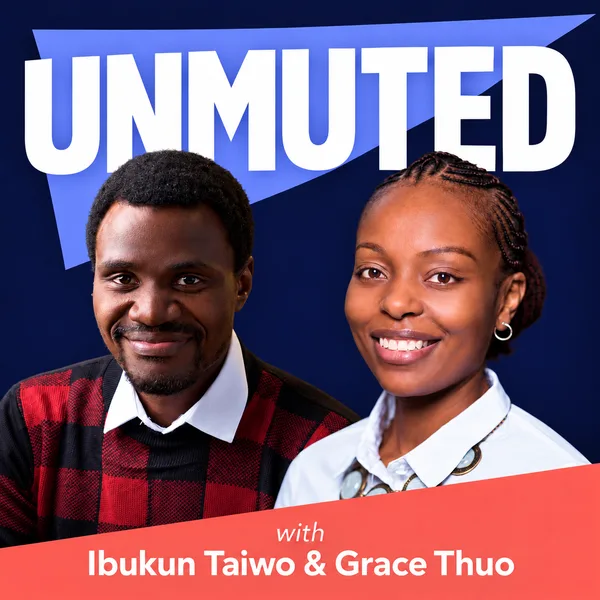
Hosted by Ibukun Taiwo and Grace Thuo
Music: ‘Uplifting Bass’ by Lily J, via Mixkit